
Christmas Is Like Dizzy--Part 2
If this article fails to display properly on your device, click here to read on my website.
…continuing from Part 1:
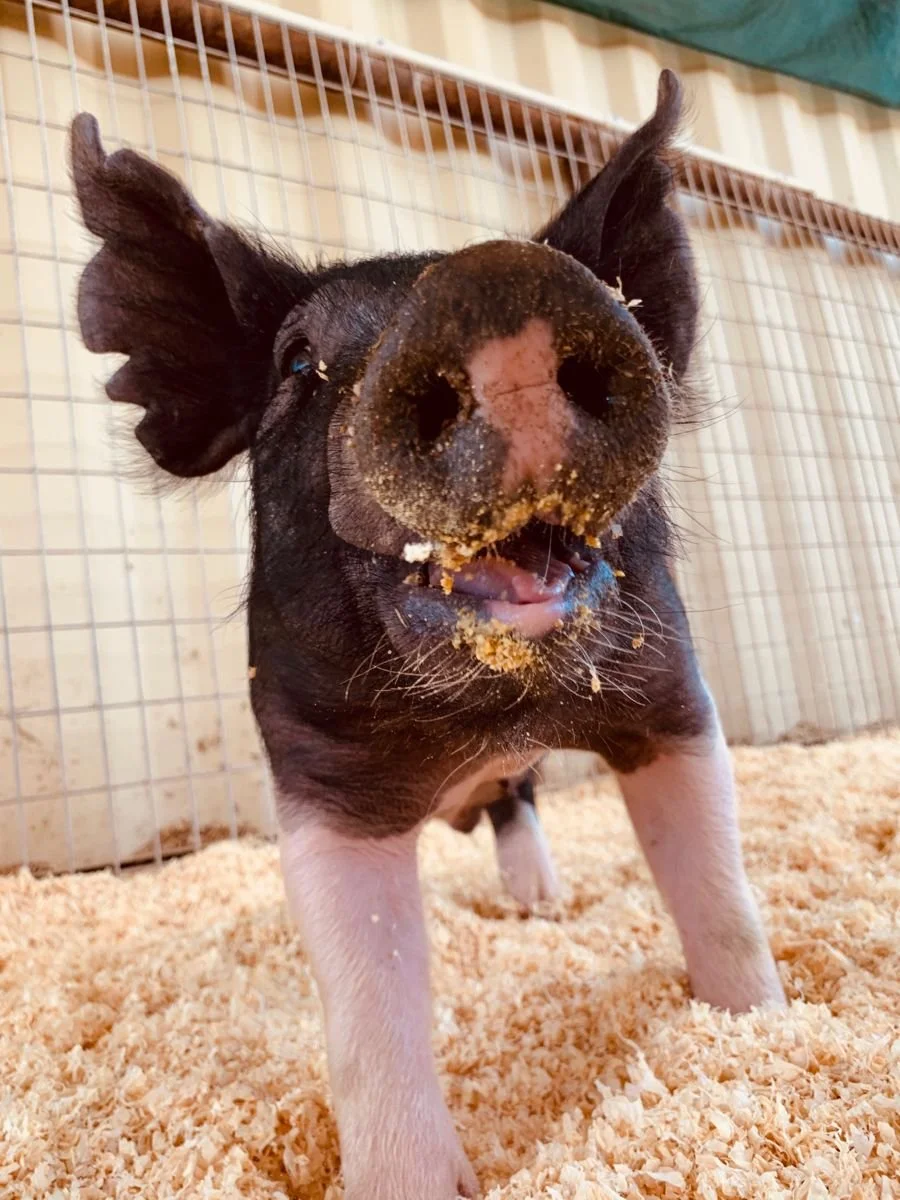
Dizzy had gotten into the muck easily enough, but when he attempted to get out, given that he walked in circles, Dizzy had literally screwed himself into the mud and manure and waste that had slid down the feeding floor for years. There, submerged to his shoulders in a greenish-brown ooze that seemed a good idea at the time, Dizzy was helplessly stuck from trying to get out of the mess he had wandered into.
I stepped into the repugnant morass in an effort to reach Dizzy, but quickly encountered two problems: First, Dizzy was screwed in deep, and second, he was in deeper than my boots were tall.
I backed out to my partner’s side where we again faced the same decision we had encountered months earlier: Do we dispatch him where he is—the wise and conscionable thing to do—or should we attempt to rescue him?
It strikes me that this must be similar to the decision facing God and Jesus. With their hands crammed deep in their pockets, standing on the precipice of heaven and the brink of earth’s morass, their dilemma was: Should we dispatch them where they are or should we attempt a rescue?
Christmas is like Dizzy. Despite all of our intelligence and the lives of those who have gone before us, mankind progresses through history in circles, each man living just as the man before him lived. As it is said, the more things change, the more they remain the same. In the repetitious circles of our independence and self-absorption, we have lived life by wandering farther into the pond of our own detritus, only to screw ourselves inextricably into its muck attempting to be free. Up to our necks in our waste, we are hopelessly stuck unless mercy is extended to us.
The incarnation of God in Christ is the mercy we need. Desperately, we require someone who will come to where we are, humble himself, rescue us, and lead us to safety. The Bible speaks of Jesus descending into hell and retrieving a host of captives from that deep pit. It talks of Him humbling Himself, sacrificing His reputation, taking on the refuse of our humanity as descendants of Adam, and becoming one of us. With His incarnation, Jesus took on our form. The spotless and pure Son of God became a man and descended into the hopeless, helpless, cesspool of men-run-amok through independence and waded in to retrieve us. This is redemption, and simply put, this is Christmas.
Jesus did not lasso us and pull us to Himself. He did not stand at a safe distance and shoot us between the eyes with His rifle of justice. Nor did He effuse vengeance upon us with cursing, castigating fear, and shame for breaking His rules. He did not inflict pain upon us in anger for thinking no farther ahead than to realize our malady and propensity to wander into the swampland of life when the heat of life rose. And He did not reject us when He discerned that we were screwed into the morass of our own making.
On the contrary! Helplessly trapped in our ooze—“while we were still sinners,” the Bible says—Christ came to us, kicked off His boots, and waded in to retrieve us who were irretrievably useless to Him. Without regret He was sullied by the greenish-brown dump of our lost condition, and not flinching from the stench steaming up from our bondage, He reached into our refuse, put His arms around us, and pulled us to Himself.
We conceptualize the celebration of Christmas as a banquet of cured ham, tenderloin of pork, and filet wrapped in bacon along with all the trimmings. In a very real sense it is all this and more. But in another, Christmas is the entry of “Him who knew no sin” into the world of us who are sin to the extent that He became what we are so we might become as He is.
Christmas is many things. It is the joy of a new-born babe’s soft cries, the sweet scent of an attendant cow chewing her cud, and the soft breath of the donkey upon whose back Mary had ridden to Bethlehem. It is the strange birth announcement delivered upon angelic wing to recalcitrant and reprobate shepherds tending their flocks by night upon the wrinkled hills. In a scary reality, it is the launching of an invasion into enemy territory, of a great dragon waiting to devour the Christ child, of falling stars, and clashing armies in heavenly places.

It is also the silent, holy night—the calm night—when Jesus and His Father stood with hands stuffed deep into their pockets contemplating the plight of those fallen into the hell of a vast waste and torment. It is the nod of agreement and conclusion that He who is light and life should come to those living in darkness and death, rescue them, and endow them with life eternal and abundant.
I put the toe of my left boot behind the heel of my right boot and extracted my foot. Did the same with my other foot, and stood for a moment considering what I was about to do. I began wading. The yogurt-like consistency closed around my legs. Steam rose and the ammonia smell gagged me. I suffocated, searching for a fresh breath, but found none.
Standing thigh-deep in the refuse cast off by hundreds of swine, I grasped Dizzy by his ears and began pulling. The sucking of muck slipping into the vacuum left by Dizzy’s legs was punctuated by his squealing and my grunting and the oozing gurgle of refuse expelled as I sank deeper into the swine’s sewer under Dizzy’s weight.
Perhaps I shouldn’t have done what I did. No telling what sort of nasty infection I might have contracted saving the life of a mixed up hog. I had Dizzy’s condition all over me. His predicament was under my fingernails, in my hair, and I reeked atrociously of his blunder into the manure pond. But Dizzy lived.
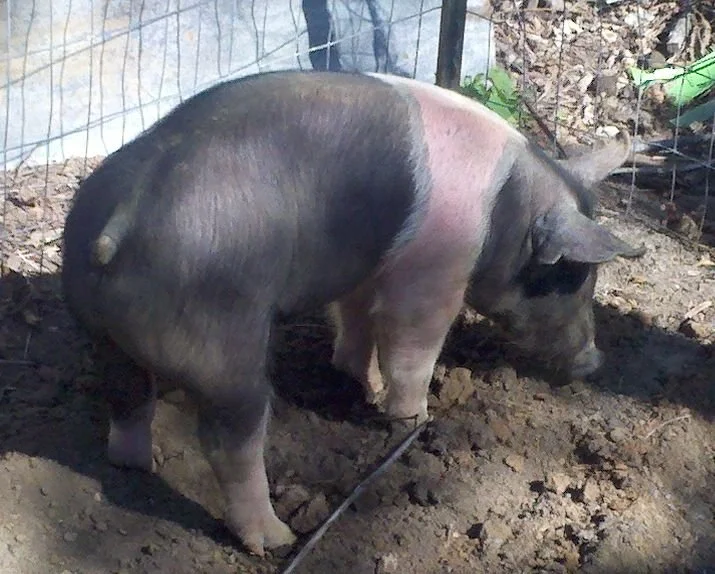
He brought me pleasure in an otherwise black and white world of Hampshire hogs, monotony, and numbers. At the time, I couldn’t see the imagery of the Incarnation. I only wanted to hose myself off as quickly as possible, throw my clothes away, and get into the shower.

I am a performer. I do a good job, have reasonable talents, a measure of intelligence, and a litany of plaques on the wall affirming that I have achieved. It is tempting, given this personal history and disposition, to believe I have worth and deserve merit. It chaps me when I am not recognized for my contributions.
Let me be blunt: Although I hate to admit it, there has been more than one Christmas when it seemed perfectly reasonable to me that Jesus would love me and come for me. After all, He desires for us to enjoy heaven together.
But Dizzy helped me get over my irrational valuation. There is no reason Jesus should have come for me. He should have simply knocked me in the head the day I failed and fell on the feeding floor of life. He should have gone about His chores and given me not even a second thought. After all, death is part of life on a farm and on Earth. There will be another to replace this flawed one. He should have put a chain around my hock and dragged me with the tractor to the ditch behind the barn.
Christmas escapes logic. The Incarnation was foolish.
I was foolish to wade in after Dizzy. I did not tell a soul what I had done. It was shameful to me that I had taken the immense risk of vile infection for something of so little value. I feared getting sick and having to confess to the doctor what I had done. I lay awake at night for many hours and many nights worrying! What I had done was stupid!
But Dizzy helped me understand the dilemma before Jesus as He considered my plight. No matter my performance and promise, I was at heart a rebel drawn by my Adamic genetics to wallow in the mud. What Jesus did was stupid. It cost Him mightily! He gave up everything. He became shame.
The parallel stops here. I did not die from some dread disease spawned by the E. coli in hog waste. Apart from having to buy new overalls, I suffered no ill effects from retrieving Dizzy from the cesspool. But Jesus did not fare so well.

Dianne and I wish you a wonderful Christmas!
While His redemption of me was successful, He did not survive the experience. The E. coli of my life and condition invaded His system such that He became what I once was. He became cursed and despised. Like my avoidance of the cesspool at the end of the feeding floor, not even Jesus’ Father came to where He was, let alone anyone else.
Of course, there is the good news of Easter and Christ’s return from hell and death, but there is the phenomenal investment of Christmas that must not be missed. We know how these two stories end: Dizzy is rescued and I live to tell about it. I am rescued and Jesus lives to tell about it.
But as another Christmas celebration loads into the chute and “Silent Night” wafts its refrain in my heart, I see in my memory the image of Dizzy—stranded—and stand again at the edge of the green pond in the pig lot and wonder what I should do. I pause, and however weak the parallel might be, I wonder about my Older Brother’s thoughts as He gazed upon the green pond of mankind’s predicament. Surely He must have contemplated what He should do.
Would I go after Dizzy all over again? I don’t know. I don’t know if the risk would be worth it.
Upon His return to heaven, I imagine Father must have said to Jesus, “Was it worth it?”
“It was. It was indeed.”
“I agree. You did the right thing.”
And after a pause, most likely with their hands stuffed in their overalls’ pockets, Father turns and says, “Oh, by the way, merry Christmas!”